I may earn a commission at no extra cost to you. #ad
Free Guide: First Aid and Emergency Medical Prep for Modern Survivalists
Jump to Section
In a true survival situation, the greatest threat isn't always a lack of food or water; it is often a minor injury that turns fatal due to lack of medical intervention. When the traditional "911" infrastructure is unavailable or overwhelmed, you become the first responder, the EMT, and the primary care provider for yourself and your family. This guide explores the essential layers of medical preparedness for the modern survivalist.
The Survivalist Medical Mindset
The first step in medical prep isn't buying gear; it’s shifting your mindset. In a "Grid-Down" or wilderness scenario, you must prioritize preventative medicine and triage. Preventative medicine means taking zero unnecessary risks—a broken leg in the woods can be a death sentence. Triage means knowing how to quickly assess who needs help first and what injuries are life-threatening versus merely painful.
Modern survival medicine follows the MARCH algorithm:
- Massive Hemorrhage: Stop the bleeding first.
- Airway: Ensure the patient can breathe.
- Respiration: Treat lung injuries (like a sucking chest wound).
- Circulation: Treat for shock.
- Hypothermia/Head: Keep the patient warm and assess for brain injury.
Essential Components of a Modern First Aid Kit
A survivalist should maintain at least two types of medical kits: an IFAK (Individual First Aid Kit) for immediate trauma, and a larger "Home Base" or "Sustainment" kit for long-term care.
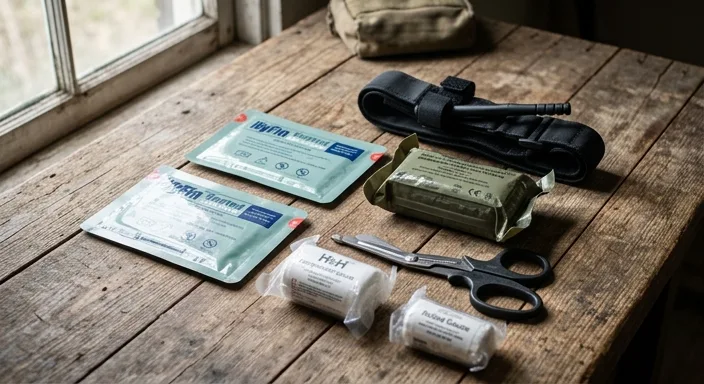
Your IFAK should be on your person and contain:
- Tourniquet: A CoTCCC-approved CAT or SOFTT-W.
- Hemostatic Gauze: QuikClot or Celox to stop arterial bleeding.
- Pressure Bandage: An Israeli bandage or OLAES bandage.
- Chest Seals: For penetrating chest trauma.
- Nitrile Gloves: Protect yourself from bloodborne pathogens.
Your Sustainment Kit should include over-the-counter medications (ibuprofen, antihistamines, anti-diarrheals), wound cleaning supplies (iodine, saline), splints, and diagnostic tools like a thermometer and blood pressure cuff.
Trauma Care vs. Routine Care
Survivalists often focus solely on "gunshot wound" kits, but "routine" illnesses kill more people in survival scenarios than combat. Hygiene-related illnesses like dysentery and simple infections can escalate quickly. While trauma care requires speed and specific mechanical tools, routine care requires patience, clean water, and a deep stock of basic supplies.
Manage minor wounds with the "Rule of Three": Clean it, Close it (if appropriate), and Cover it. In a long-term scenario, even a small scratch must be monitored daily for signs of infection (redness, heat, swelling, or red streaks).
Prescription Meds and Long-Term Stockpiling
If you or a family member depends on daily medication (insulin, heart meds, thyroid hormones), this is your greatest vulnerability. Modern survivalists work with their doctors to get 90-day supplies or use services designed for preparedness that provide emergency "medication kits."
Antibiotics are also a cornerstone of survival prep. While "fish antibiotics" were once a popular prepper hack, they are increasingly difficult to source and carry risks. It is far better to seek out a legal, human-grade emergency supply of broad-spectrum antibiotics like Amoxicillin or Ciprofloxacin through specialized medical services.
Natural Remedies and Herbal Alternatives
When the pharmacy is empty, nature provides. While not a replacement for modern medicine, herbal knowledge is a vital backup. For example:
- Honey: Natural antibacterial properties for wound dressing.
- Willow Bark: Contains salicin, a precursor to aspirin (pain relief).
- Garlic: Broad-spectrum antimicrobial properties.
- Activated Charcoal: Vital for treating certain types of poisoning or digestive issues.
Training: The Most Important Tool
You can own a $1,000 medical bag, but if you don't know how to pack a wound or identify the signs of tension pneumothorax, that bag is just dead weight. At a minimum, every survivalist should take:
- Stop The Bleed: A free or low-cost course on hemorrhage control.
- Wilderness First Aid (WFA): Teaches you how to provide care when help is hours or days away.
- CPR/AED Certification: Standard but essential knowledge.
Frequently Asked Questions
What is the single most important item in a survival medical kit?
The most critical item for trauma is a high-quality, CoTCCC-recommended tourniquet (like the CAT Gen 7). For general survival, the most important "item" is actually medical training.
Can I use expired medications in an emergency?
Most solid-form medications retain much of their potency for years past the expiration date. However, avoid using expired liquids, insulin, or tetracycline, as these can degrade or become harmful.
How often should I check my medical supplies?
You should perform a full inventory and inspection every six months. Check for expired meds, degraded rubber on tourniquets, and seal integrity on sterile gauze.