Free Guide: Urban Disaster Readiness and High-Rise Survival Strategies
Jump to Section
In a major disaster, cities transform from centers of convenience into complex survival traps. High-rise buildings, while offering structural safety and altitude, present unique challenges: elevators that stop working, water pumps that fail, and limited exit points. This guide provides the advanced strategies necessary for those living in the "concrete jungle" to navigate a total grid-down scenario.
Understanding Urban Fragility
Urban environments operate on a "Just-in-Time" (JIT) delivery system. Most cities have less than three days of food on grocery shelves. Furthermore, the infrastructure is a delicate web of interdependencies. When electricity fails, the water pumps that push water to the 20th floor fail. When the internet goes down, the supply chains that bring fuel to local gas stations snap instantly.
To survive in an urban setting, you must acknowledge that you are living in a high-density environment where competition for resources will be fierce and immediate. Your strategy must prioritize speed, stealth, and self-sufficiency.
The Dynamics of High-Rise Survival
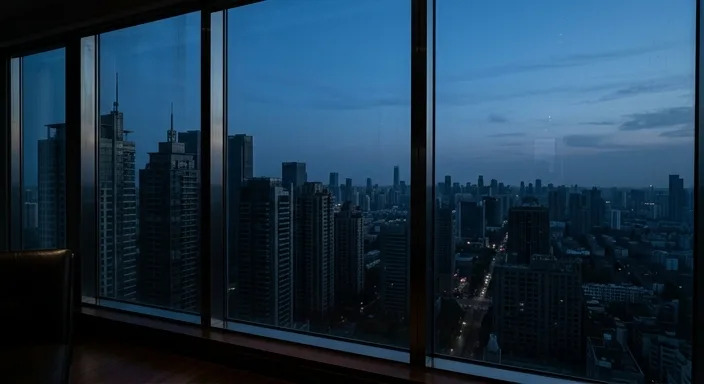
If you live or work in a skyscraper, your survival reality is vertical. Most people plan for horizontal movement (driving or walking away), but in a high-rise, your first challenge is descending or ascending hundreds of feet of stairs.
High-rises act as "islands" during disasters. If the lobby is flooded or blocked by civil unrest, you are effectively marooned on the upper floors. Conversely, the upper floors offer a vantage point and a barrier against ground-level threats. Understanding the mechanical heart of your building—where the backup generators are, how the gravity-fed water tanks work, and where the fire exits lead—is your first priority.
The 'Stay or Go' Decision Matrix
The most critical decision in an urban disaster is whether to "Bug In" (shelter in place) or "Bug Out" (evacuate). In a high-rise, this decision is even more nuanced.
- When to Bug In: If the threat is environmental (chemical spill, temporary civil unrest) and your structure is sound. Ensure you have 14+ days of water and food stored locally.
- When to Bug Out: If the building's structural integrity is compromised, if there is a fire that cannot be contained, or if the duration of the utility failure exceeds your stored resources.
Remember: In a city, the "Golden Hour" of evacuation is the first 60 minutes after a disaster. Once the masses realize the gravity of the situation, the exits will be choked.
Vertical Evacuation and Stairwell Tactics
In a power failure, elevators become steel coffins. You must be physically prepared to descend (or ascend) dozens of flights of stairs carrying a weighted pack.
Stairwell safety is paramount. In a fire, stairwells act as chimneys for smoke. In a security threat, they are "fatal funnels." Always carry a high-quality smoke mask (like an RZ mask or a full-face respirator) and a high-lumen tactical flashlight. When descending, stay on the "inside" of the stairwell curve to move faster, but be aware of others rushing down behind you. If you encounter smoke, stay low; the air is cleaner near the floor.
Water and Sanitation in a Grid-Down City
When the grid goes down, the water stops flowing to upper floors almost immediately. You must have a "water plan" that doesn't rely on the tap. This includes storing collapsible water bladders (like a WaterBob) that can be filled at the first sign of trouble.
Sanitation is the silent killer in urban survival. If the water stops, do not use your toilet. The sewers will back up, and without water to flush, your apartment will become a biohazard within 48 hours. Use a two-bucket system: one for liquids and one for solids, using sawdust or kitty litter to manage odors and pathogens.
Security and Defense in High-Density Areas
In a high-rise, your primary defensive advantage is the limited number of entry points. Reinforcing your front door with a "Door Jammer" or a security bar is essential. However, do not forget your balcony or windows if they are accessible from adjacent units or fire escapes.
Maintain "Light Discipline." In a dark city, a single candle or flashlight in a high-rise window is a beacon for miles. Use blackout curtains or Mylar blankets to keep your presence hidden. In an urban collapse, being invisible is often better than being armed.
Frequently Asked Questions
Utilize dead space: under the bed, in the back of closets, and inside the bathtub using a WaterBob during an emergency. Focus on stackable, 5-gallon containers which are easier to move than larger drums.
Fire escapes are often exposed and can be used by intruders to gain entry. Use them only as a secondary exit if the main stairwell is blocked, and ensure you have a way to secure the escape window from the inside afterward.
High-rises can become ovens in the summer without HVAC. Use reflective film on windows, create cross-breezes if safe, and stay on the lowest floor possible where it is naturally cooler.