Strategic Food Stockpiling and Long-Term Storage Solutions
Jump to Section
The Foundation of Food Preparedness
In an increasingly volatile world, food security is no longer just a concern for those living "off-grid." From supply chain disruptions and inflation to natural disasters, having a strategic food stockpile is the ultimate insurance policy. However, effective stockpiling is more than just buying extra cans of soup; it requires a calculated approach to nutrition, calories, and longevity.
When starting your journey, the first step is calculating your caloric needs. An average adult requires between 2,000 and 2,500 calories per day to maintain weight and energy during stress. A strategic stockpile balances three core pillars: Caloric Density, Nutritional Balance, and Palatability. If you only store white rice, you will survive, but you will face "appetite fatigue" and potential nutrient deficiencies.
Understanding Shelf-Life and Food Types
Not all food is created equal when it comes to the passage of time. To build a resilient system, you must categorize your food into three distinct "tiers" of shelf-life:
- Short-Term (1-2 Years): Standard canned goods, pasta, oils, and "deep pantry" items that you eat and replace regularly.
- Medium-Term (5-10 Years): Dehydrated foods, specialty canned meats, and properly sealed dry goods like flour (if treated).
- Long-Term (20-30+ Years): Hard grains (wheat, corn), white rice, beans, salt, sugar, and freeze-dried meals packed in Mylar with oxygen absorbers.
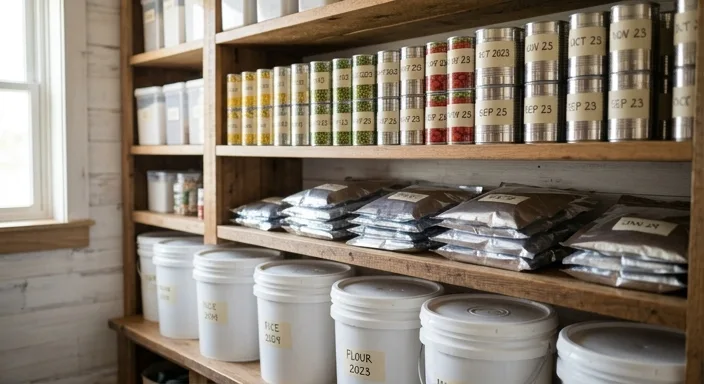
The "Golden Rule" of stockpiling is to store what you eat. If your family dislikes kidney beans today, they won't magically love them during a crisis. Focus on staples that can be used in multiple recipes and offer a sense of normalcy.
Essential Tools for Long-Term Storage
To move beyond the 2-year shelf life of grocery store packaging, you need professional-grade storage solutions. The industry standard involves a three-layer defense: Mylar Bags, Oxygen Absorbers, and Food-Grade Buckets.
Mylar Bags: These are foil-lined bags that provide an incredible barrier against light, moisture, and oxygen. For long-term storage, use 5-mil or 7-mil thickness. These bags are heat-sealed using a dedicated sealer or even a standard hair straightening iron.
Oxygen Absorbers (OAs): These small packets contain iron powder. When sealed inside a Mylar bag, they chemically remove the oxygen, preventing spoilage and killing potential insect larvae. For a 5-gallon bag, 2000cc to 2500cc of OAs is generally recommended.
Food-Grade Buckets: The bucket serves as the "exoskeleton." It protects the Mylar bags from punctures and rodents while allowing for easy stacking. Always ensure your buckets are "food grade" (usually HDPE #2 plastic) to avoid chemical leaching.
Building Your Phased Supply Plan
Attempting to buy a year's worth of food in one weekend is expensive and overwhelming. Use a phased approach to build your inventory strategically:
- The 3-Day Emergency Kit: Focus on ready-to-eat meals that require no cooking (useful for immediate evacuations or power outages).
- The 3-Month Deep Pantry: Simply buy double of what you normally eat. If you use one jar of peanut butter a week, buy two. Eventually, you will have a 90-day buffer of "normal" food.
- The 1-Year+ Long-Term Reserve: This is where you invest in bulk grains, beans, and freeze-dried proteins. This layer is designed for "black swan" events where the grocery stores are empty for months.
The Five Enemies of Food Storage
Even the best-packed food will degrade if stored in the wrong environment. To maximize longevity, you must combat these five factors:
- Heat: This is the most significant factor. For every 10-degree (F) drop in temperature, the shelf life of your food nearly doubles. Aim for a cool, consistent basement or climate-controlled room.
- Light: UV rays break down nutritional content and fats. Mylar bags and opaque buckets solve this problem.
- Moisture: High humidity leads to mold and bacterial growth. Never store food directly on concrete floors; use pallets or shelving to allow airflow.
- Oxygen: Oxidation turns fats rancid and allows bugs to survive. Oxygen absorbers are your primary weapon here.
- Pests: Rodents can chew through almost anything. Hard plastic buckets are essential for stopping mice and rats.
Organizing and Rotating Your Stockpile
A stockpile is a living asset, not a "set it and forget it" museum. Without organization, you will find yourself throwing away expired food—essentially throwing away money. Implement the FIFO (First In, First Out) system. When you buy new cans, place them at the back of the shelf so you always use the oldest items first.
Labeling is non-negotiable. Every bucket and bag should be clearly marked with:
1. Content Name
2. Date Packaged
3. "Best By" or "Estimated Expiration" date.
Keep a digital or paper inventory log to track your total caloric count across different categories (Proteins, Carbs, Fats, Fruits/Veg).
Frequently Asked Questions
No. White rice can last 25-30 years if properly sealed. Brown rice contains natural oils that go rancid, giving it a shelf life of only 6-12 months, even in Mylar.
Yes! Oxygen absorbers are excellent for Mason jars. If the lid "pops" down, you know you've achieved a vacuum seal.
The standard recommendation is 1 gallon per person per day. However, if your stockpile consists mainly of dehydrated foods, you will need an additional 0.5 gallons per person for rehydration.
In most cases, yes. "Best By" dates usually refer to quality and texture rather than safety. As long as the can isn't rusted, dented, or bulging, the food inside is often safe for years beyond the date, though nutritional value may slowly decline.