Free Guide: The 2026 Prepper’s Handbook to Off-Grid Water Purification
Jump to Section
- Understanding Water Contaminants in 2026
- The Core Methods of Off-Grid Water Purification
- Boiling: The Oldest and Most Reliable Method
- Chemical Disinfection: Iodine, Bleach, and Chlorine Dioxide
- Advanced Filtration: Gravity Filters and Portable Units
- Solar Disinfection (SODIS) and Distillation
- Building a Long-Term Water Storage Strategy
- Frequently Asked Questions
Water is the single most critical resource for survival. While the human body can endure weeks without food, three days without water is often the physiological limit. In a 2026 landscape—characterized by increasing climate volatility, potential infrastructure cyber-attacks, and localized resource scarcity—relying on a municipal tap is a gamble many preppers are no longer willing to take.
This handbook explores the nuances of transforming raw, potentially contaminated environmental water into life-sustaining hydration. We will cover biological threats, chemical pollutants, and the tiered systems required to maintain a family’s health in an off-grid scenario.
Understanding Water Contaminants in 2026
Before you can treat water, you must understand what you are treating. In 2026, we categorize threats into four primary pillars:
- Protozoa (Giardia, Cryptosporidium): Larger organisms that are easily filtered but highly resistant to chemical treatments like iodine.
- Bacteria (E. coli, Salmonella, Cholera): Mid-sized pathogens that cause severe gastrointestinal distress.
- Viruses (Norovirus, Hepatitis A, Rotavirus): The smallest biological threats. Many portable "filters" fail to catch viruses, requiring "purifiers" or chemical intervention.
- Chemicals and Heavy Metals: Pesticide runoff, microplastics, and industrial lead or arsenic. These cannot be "killed" by boiling; they must be filtered through activated carbon or removed via distillation.
The Core Methods of Off-Grid Water Purification
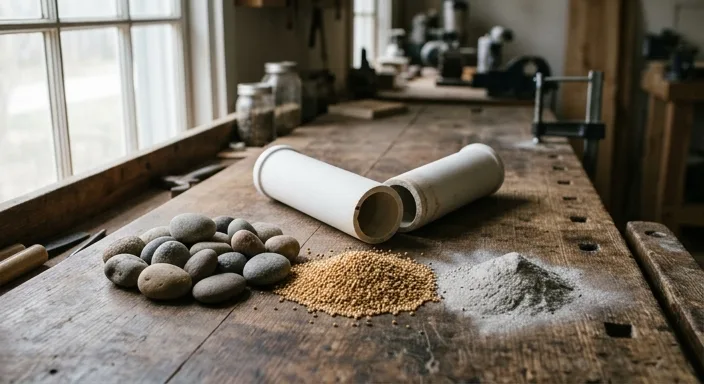
Effective water treatment usually involves a "multi-barrier" approach. This means using more than one method to ensure total safety. For example, you might use a sediment filter (stage 1) followed by a 0.1-micron hollow-fiber filter (stage 2) and finish with a UV light or chemical treatment (stage 3).
By layering your defenses, you account for the failure or limitations of any single method. If your filter has a microscopic crack, the chemical treatment will still neutralize the pathogens that slip through.
Boiling: The Oldest and Most Reliable Method
Boiling is the gold standard for biological decontamination. It requires no specialized equipment other than a heat source and a container. Boiling kills all pathogens: viruses, bacteria, and protozoa alike.
The Protocol: Bring water to a "rolling boil" (large bubbles rapidly rising). Maintain this boil for at least one full minute. If you are at high altitudes (above 2,000 meters/6,500 feet), the boiling point of water is lower, so you must boil for three minutes to ensure total pathogen destruction.
Note: Boiling does not remove heavy metals or chemical toxins. In fact, it can concentrate them as the water evaporates. Always pre-filter murky water before boiling.
Chemical Disinfection: Iodine, Bleach, and Chlorine Dioxide
Chemical treatments are lightweight and essential for "bug-out" bags. However, they have varied efficacy rates.
- Chlorine Dioxide: The superior chemical choice. It is effective against viruses, bacteria, and even Cryptosporidium (which iodine and bleach often miss). It typically comes in tablet or two-part liquid form.
- Liquid Bleach: Use only regular, unscented household bleach. Add 8 drops per gallon of clear water (16 drops for cloudy water). Let it sit for 30 minutes. If there is no slight chlorine smell after 30 minutes, repeat the dose and wait again.
- Iodine: Effective against bacteria and viruses, but leaves a harsh taste and is not recommended for pregnant women or those with thyroid issues.
Advanced Filtration: Gravity Filters and Portable Units
Modern filtration has advanced significantly by 2026. Most preppers now utilize Hollow Fiber Membrane technology. These filters contain thousands of tiny "straws" with microscopic pores.
Gravity Systems: These are ideal for basecamp or long-term off-grid living. You hang a "dirty" bag of water, and gravity pushes it through an inline filter into a "clean" reservoir. They require zero manual pumping and can process liters of water while you perform other chores.
When selecting a filter, check the micron rating. A 0.1-micron filter removes bacteria and protozoa. To remove viruses mechanically, you need an "Ultra-Filter" with a rating of 0.02 microns or lower.
Solar Disinfection (SODIS) and Distillation
If you have no fuel and no chemicals, the sun is your ally. The SODIS method involves placing water in clear PET plastic bottles and laying them on a dark roof or reflective surface in direct sunlight for 6 hours (or two days if cloudy). The UV-A rays and the heat work together to kill pathogens.
Solar Distillation: This is the only way to turn saltwater or heavily chemically contaminated water into pure drinking water. By using a solar still, you evaporate the water, leaving contaminants behind, and collect the pure condensate. This is a slow process but vital in coastal or industrial-disaster environments.
Building a Long-Term Water Storage Strategy
Purification is only half the battle; storage is the other. In a 2026 grid-down scenario, you need at least one gallon per person per day for drinking and basic hygiene. For a family of four, a 55-gallon drum provides only about two weeks of water.
Consider the "Nested Storage" approach:
- Immediate: 3-7 days of bottled water or filled "WaterBobs" (bathtubs liners).
- Medium-Term: 55-gallon food-grade drums treated with water preserver (which keeps water safe for 5 years).
- Long-Term: Rainwater harvesting systems with dedicated first-flush diverters to keep roof debris out of your tanks.
Frequently Asked Questions
Can I drink pool water in an emergency?
Pool water contains high levels of chlorine and other chemicals (like cyanuric acid and algaecides). While it can be used for flushing toilets, it should only be consumed as a last resort after being filtered through a high-quality activated carbon filter to remove the excess chemicals.
How can I tell if my filter is broken?
If you drop a hollow-fiber filter, the internal membranes can crack. A simple "bubble test" can sometimes reveal failure, but the safest rule is: if it has been dropped on a hard surface or allowed to freeze while wet, it should be discarded.
Do I need to filter rainwater?
Yes. Rainwater can pick up pollutants from the air and pathogens from bird droppings on your roof. Always run rainwater through at least a basic sediment and carbon filter before consumption.