The 2026 Ultimate Bug Out Bag Essentials Checklist
Jump to Section
In 2026, the concept of a Bug Out Bag (BOB) has evolved. It is no longer just a bag filled with canned beans and a heavy tent. A modern Bug Out Bag is a precision-engineered 72-hour survival kit designed to help you evacuate a dangerous area and reach a safe secondary location as quickly and efficiently as possible. Whether it is a natural disaster, civil unrest, or infrastructure failure, your BOB is your ultimate insurance policy.
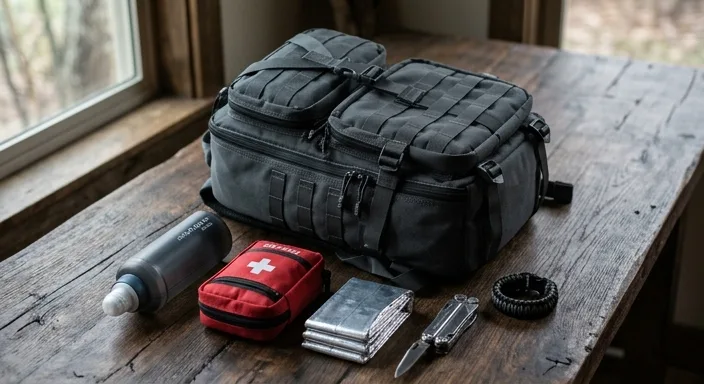
Why You Need a Modern Bug Out Bag
Traditional prepping advice often focuses on long-term homesteading. However, a Bug Out Bag is specifically for the first 72 hours of an emergency—the "Golden Window" where your mobility determines your survival. In 2026, we face unique challenges: increased urban density, digital dependencies, and rapidly shifting environmental patterns. Your bag needs to be lighter, smarter, and more versatile than the kits of a decade ago.
The Pack: Selecting Your Survival Foundation
Your bag itself is the most important piece of gear. If the pack fails or causes physical injury due to poor weight distribution, the gear inside becomes a liability. Look for the following features:
- Internal Frame: Provides structure and transfers weight to your hips rather than your shoulders.
- Capacity: Aim for 40 to 55 liters. Anything larger becomes too heavy to carry over long distances.
- The "Gray Man" Aesthetic: Avoid excessive camouflage or "tactical" MOLLE webbing if you want to blend into a crowd during an urban evacuation.
- Water Resistance: Look for 500D or 1000D Cordura nylon with a built-in rain cover.
Water and Hydration Essentials
You can survive weeks without food, but only three days without water. In a bug-out scenario, you cannot carry 72 hours' worth of water (about 3 gallons) because it is too heavy (24+ lbs). Instead, carry the tools to create potable water.
- Personal Water Filter: A Hollow Fiber Membrane filter (like a Sawyer Squeeze) to remove 99.99% of bacteria and protozoa.
- Purification Tablets: Chlorine dioxide tablets as a backup for viruses that filters can't catch.
- Stainless Steel Bottle: Single-walled (not insulated) so you can boil water over a fire if necessary.
- Hydration Bladder: A 2L or 3L reservoir for hands-free drinking while moving.
Food and Lightweight Nutrition
Focus on calorie density and ease of preparation. Avoid heavy cans. You want foods that provide at least 2,000 to 2,500 calories per day with minimal weight.
- Freeze-Dried Meals: High-calorie, lightweight, and long shelf life. Just add hot water.
- Emergency Ration Bars: Dense blocks of calories that don't require water to digest (unlike jerky).
- Trail Mix and Nut Butters: Excellent for sustained energy during high physical exertion.
- Spork and Small Pot: A lightweight titanium set is ideal for cooking and eating.
Shelter, Sleep, and Warmth
Exposure is one of the leading causes of death in survival situations. Your bag must include a way to maintain your core body temperature regardless of the weather.
Essential shelter items include a lightweight sil-nylon tarp, which is more versatile than a tent, and a high-quality emergency bivvy bag. Unlike cheap "space blankets," a bivvy is a sleeping bag shape that reflects 90% of your body heat and protects you from wind and rain. Don't forget 50 feet of 550 Paracord for lashing your shelter together.
First Aid and Tactical Hygiene
Your first aid kit (IFAK) should focus on trauma and infection. In 2026, we also emphasize hygiene to prevent disease when infrastructure fails.
- Trauma Gear: A CAT Tourniquet, hemostatic gauze (QuikClot), and pressure bandages.
- General Meds: Ibuprofen, antihistamines, and anti-diarrheal medication.
- Hygiene: Compressed "coin" towels, travel-sized biodegradable soap, and hand sanitizer.
- Foot Care: Moleskin or Leukotape for blisters—immobility is a death sentence.
Tools, Lighting, and Fire
Keep your toolset minimal but high-quality. Multi-purpose is the name of the game. A heavy-duty multi-tool is often more useful than a giant survival knife. For lighting, always follow the "Rule of Three": one headlamp (hands-free), one handheld flashlight, and one chemical light stick for signaling.
For fire, carry three different ignition sources: a Ferrocerium rod (works when wet), a butane lighter, and waterproof storm matches. Always carry a small tin of "tinder" like cotton balls soaked in petroleum jelly to ensure a fire starts in even the worst conditions.
Modern Communication and Documents
In a 2026 survival scenario, information is just as valuable as water. Your Bug Out Bag should include a small AM/FM/NOAA weather radio to receive emergency broadcasts. Also, maintain a "Digital Bug Out Bag"—an encrypted USB drive containing scans of your ID, deeds, insurance policies, and family photos.
Paper maps are non-negotiable. GPS may fail or be jammed. Have physical maps of your local area and your primary/secondary evacuation routes marked in permanent ink.
Next Guide: Strategic Food Stockpiling and Storage Solutions →Frequently Asked Questions
How much should my Bug Out Bag weigh?
Ideally, your bag should not exceed 15-20% of your body weight. For a 180lb person, that is roughly 27-36 lbs. Staying light allows you to move faster and longer.
Should I keep my Bug Out Bag in my car?
It depends on your climate. High heat in a car can degrade food, water filters, and medical supplies. If you do keep it in a vehicle, rotate your supplies every 3 months.
Do I need a weapon in my BOB?
Self-defense is a personal choice based on local laws and training. At the very least, carry a high-lumen tactical flashlight which can disorient an attacker and provide a non-lethal defense option.